

Tanti Auguri Amilcare
Major cultural events don’t only happen in big cities, stadiums, or within powerful economic circuits. They can also take place in small communities. The event held on Saturday, August 31, 2024, in Paderno Ponchielli—a small town set in the countryside of the Cremona area—was undoubtedly one of them. It was attended by a large audience of musicians, enthusiasts, and the composer’s fellow townspeople, who paid a fitting tribute to their local figure of pride. The atmosphere was free of formalities and empty rhetoric: a simple, direct, genuine, and heartfelt occasion.
The celebration of Ponchielli’s birthday also provided the opportunity to present to the public the “PONCHIELLI 2024” project. This four-year initiative, launched in 2021, aims to recover and rediscover the entire wind-band repertoire of the great composer from Cremona.
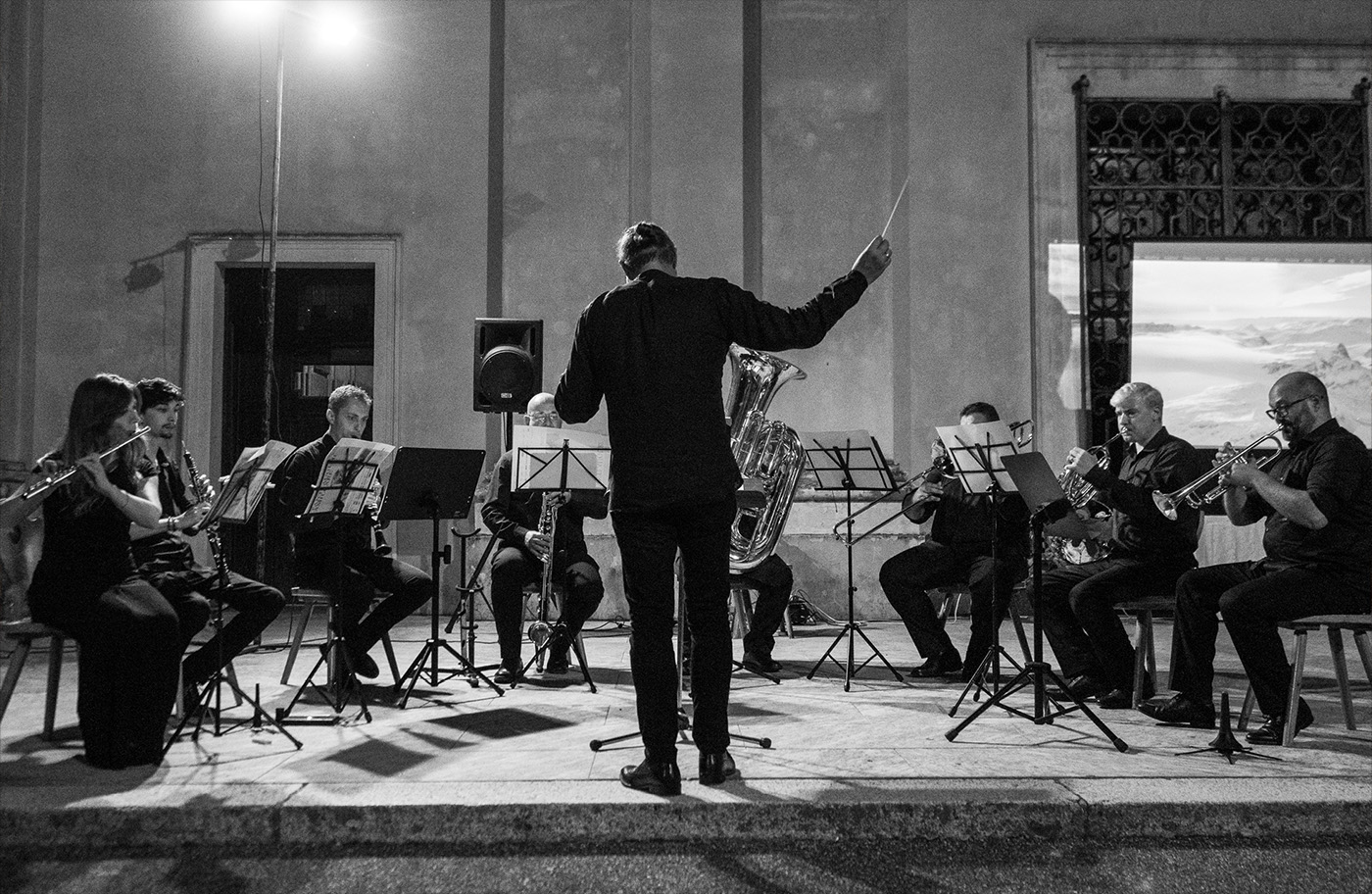
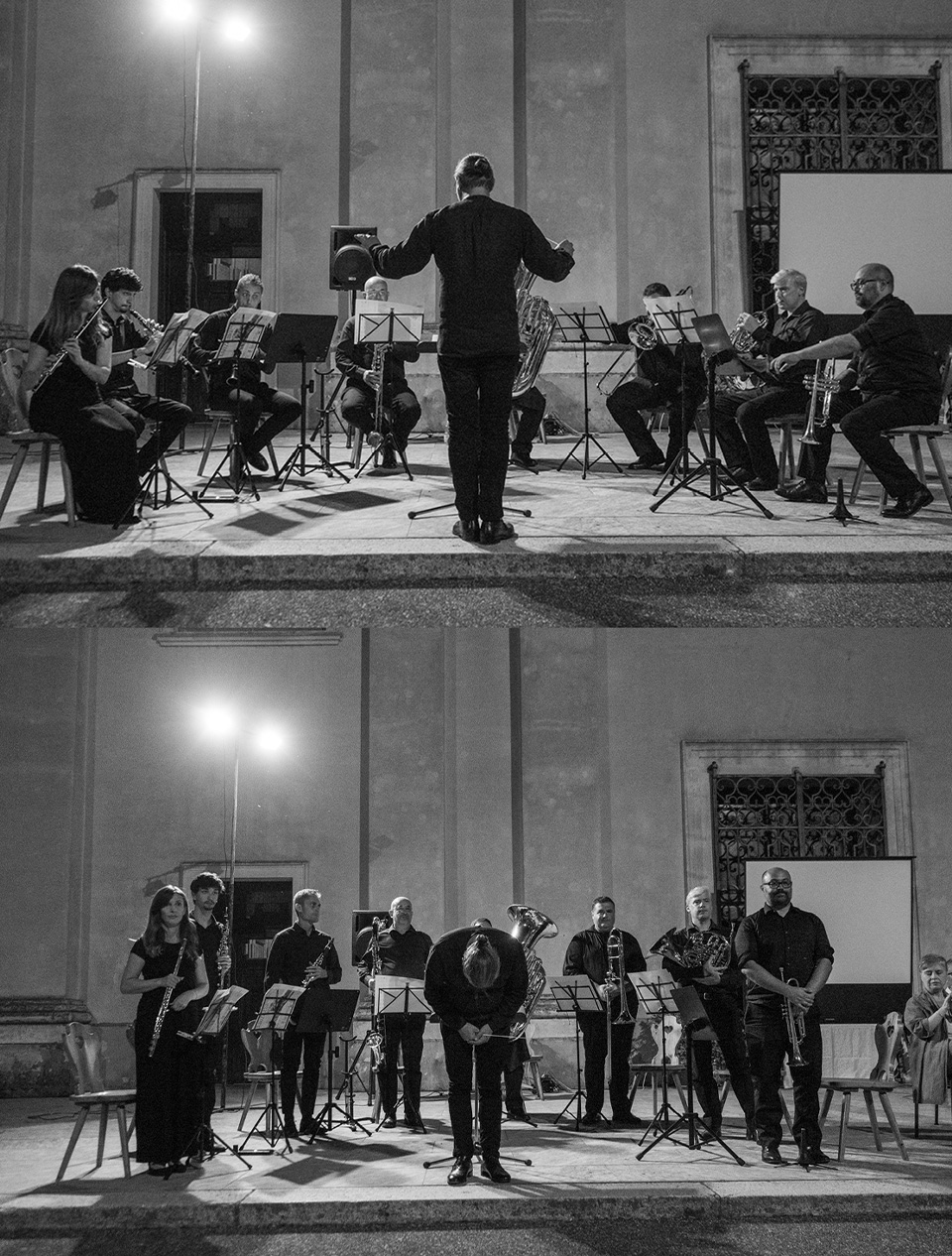
After opening remarks by the Deputy Mayor of Paderno Ponchielli, Prof. Simona Ravasi, the evening began with FORTUNA, a polka performed by the “FilHarmonia Chamber Winds” conducted by Maestro Denis Salvini.
Prof. Pietro Zappalà—musicologist and professor at the University of Pavia—introduced the explanatory part of the project with an engaging historical overview of Ponchielli and his musical output. It is worth noting that during his time as director of the municipal bands of Piacenza and Cremona, Ponchielli had to produce a considerable number of compositions, since his contract required him at certain times of the year to perform two concerts per week.
Dr. Raffaella Barbierato, Director of the State Library of Cremona, then described the role of the institution she leads in preserving the historical documents of the Cremonese composer. She also highlighted the ongoing commitment to expanding this collection through the acquisition of additional archival materials—either discovered or purchased—in order to further support research into both Ponchielli’s works and his life.
The most substantial contribution came from Prof. Emiliano Gusperti, who has been entrusted with transcribing the entire wind repertoire using specialized music notation software. He explained the difficulties involved in such a task, multiplied nearly ninety times—the number of original works on which the project has focused. He also illustrated the instrumental differences resulting from the evolution of musical instruments, which has led to the disappearance of some instruments used in the 19th century and their replacement with modern equivalents.
He also announced that a series of easier arrangements will be produced, following a practice common abroad with major composers, so that youth ensembles can also perform these works. The goal is to promote the widest possible knowledge of the Cremonese composer. A particularly amusing moment came when he showed the audience some of the witty remarks that Ponchielli used to write in his scores.
The final speech was given by Giorgio Zanolini, National Coordinator of Tavolo Permanente delle Federazioni Bandistiche Italiane, who explained the motivations behind the project and its different stages. Starting with the restoration and preservation of the original documents, the project moved on to their digitization to facilitate consultation by scholars and prevent further deterioration. The materials have also been transcribed into digital format for both the original and modern wind band instrumentation, and video scores have been created to allow both viewing and listening.
The final stage of the project will be the publication of PDF scores that will be made freely available to wind bands and wind orchestras around the world. The aim is to bring Ponchielli’s music back to modern audiences and to the places for which it was originally written: theatres, streets, and public squares. This is the first project of its kind worldwide to comprehensively address a classical composer and his entire body of wind music. Several international institutions have already made contact to learn about the work carried out and potentially take inspiration from it.
At the end of the evening, Maestro Denis Salvini also spoke in his role as President of D.I.B.A. (Italian Association of Band Conductors). He praised the valuable work undertaken in rediscovering a musical heritage of great beauty and historical significance, and confirmed that he will encourage Italian ensembles to draw from the scores that will be made available and include them in their concert repertoires.
The pieces performed during the evening by the FilHarmonia Chamber Winds, conducted by Maestro Denis Salvini, and which alternated with the speakers’ presentations, were:
FORTUNA – polka
LA TASSA MOBILIARE – polka
LAVINA – scottish
L’INNAMORATA – mazurka
MARCIA No. 4
During the evening there was also mention of the upcoming bicentenary in 2034. Given the scale of Ponchielli’s artistic and musical production, a dedicated committee will soon need to be established. It will be able to draw inspiration from the work already carried out within this project—particularly considering that the entire wind repertoire has already been addressed—and will therefore be free to focus on the many other materials still to be explored and promoted, including both operatic and sacred works.
Gli eventi di grande rilievo culturale si fanno anche nei piccoli centri, non solo nelle città, negli stadi e all’interno dei potenti circuiti economici. Quello di sabato 31 Agosto 2024 a Paderno Ponchielli, piccola comunità immersa nella campagna cremonese, di sicuro è stato un grande evento che si è svolto alla presenta di un nutrito pubblico formato da musicisti, appassionati e dagli attuali concittadini del compositore, i quali hanno reso un giusto omaggio alla gloria locale. Il tutto senza formalismi o formule vuote, in un evento semplice, diretto, vero e sentito. I festeggiamenti del suo compleanno sono stati l’occasione per la presentazione al pubblico del progetto “PONCHIELLI 2024”, operazione di durata quadriennale iniziata nel 2021 e tesa al
recupero e la riscoperta di tutta la produzione per Fiati del grande compositore cremonese. Dopo i saluti del vice Sindaco di Paderno Ponchielli, Prof.ssa Simona Ravasi la serata è iniziata sulle note di FORTUNA, polka eseguita dai “FilHarmonia Chamber Winds” diretti dal M° Denis Salvini.
Al Prof. Pietro Zappalà, esperto musicologo e docente dell’Università di Pavia, il compito di introdurre la parte delle spiegazioni del progetto, con un interessantissimo focus storico sulla figura di Ponchielli e di tutta la sua produzione. Da notare che Ponchielli, nella veste di Direttore delle Bande Municipali di Piacenza e Cremona doveva produrre un notevole numero di composizioni, dato che per contratto in alcuni momenti dell’anno doveva eseguire due concerti la settimana.
La Dott.ssa Raffaella Barbierato, Direttrice della Biblioteca Statale di Cremona, ha invece illustrato la funzione dell’ente da Lei rappresentato nella custodia dei documenti storici del compositore cremonese. Da notare l’impegno all’incremento di tale dotazione tramite l’acquisizione di ulteriori fondi, reperiti o acquistati, per contribuire a studiare e approfondire sia le opere sia la vita di Ponchielli.
L’intervento più corposo è stato quello del Prof. Emiliano Gusperti, a cui è stato affidato il compito di trascrivere tutta la produzione per Fiati con apposito software musicale.
Ha spiegato le difficoltà di tale operazione, moltiplicata per novanta volte in quanto tanti sono i brani originali sui quali ci si è concentrati, illustrando le diversità strumentali date dall’evoluzione
degli strumenti musicali, che ha portato alla scomparsa di alcuni presenti nel 1800 sostituiti con altri moderni.
Ha poi informato che verrà realizzata pure una linea di brani di difficoltà limitata per proporli, così come si fa normalmente all’estero coi grandi autori, anche ai gruppi musicali giovanili, nell’ottica di far conoscere il più possibile il compositore cremonese. Curiosa la parte in cui ha mostrato al pubblico alcune delle note spiritose che Ponchielli soleva
inserire sui suoi spartiti.
Infine ecco l’intervento del Coordinatore Nazionale del “Tavolo Permanente delle Federazioni Bandistiche Italiane” Giorgio Zanolini, il quale ha illustrato le motivazioni del progetto e le varie fasi di realizzazione.
Partendo dal restauro e la messa in sicurezza dei documenti originali, la scansione per una loro consultazione più semplice da parte degli studiosi, ma anche per evitare che si deteriorino, nonché
la loro trascrizione in formato digitale per organico originale e moderno, si è arrivati anche alla realizzazione di spartiti video che permetteranno la consultazione e l’ascolto dei brani.
Concluderà il progetto la realizzazione di spartiti in formato pdf che saranno messi a disposizione gratuitamente delle Bande Musicali e Orchestre di Fiati di tutto il mondo, così che la Musica di Ponchielli torni a suonare per il grande pubblico moderno e nei luoghi per i quali essa era stata composta, ovvero i teatri, le strade e le piazze. Questo progetto è il primo a livello mondiale che si sia sviluppato a tutto tondo su un compositore
classico e sulla sua produzione, tant’è che alcune realtà estere hanno già preso contatto per capire tutto il lavoro svolto e prendere esempio. Anche il M° Denis Salvini è intervenuto al termine della serata nella veste di Presidente della DIBA, Direttori di Banda associati, il quale ha fatto le lodi per il meritevole lavoro svolto, per la riscoperta di un patrimonio musicale di grande valore e bellezza oltreché di valore storico,
assicurando che stimolerà le realtà italiane affinché attingano ai brani che verranno messi a disposizione per inserirli nei propri repertori e proporli al pubblico. Questi brani i brani eseguiti dai “FilHarmonia Chamber Winds” diretti dal M° Denis Salvini, e che hanno intervallato gli interventi degli esperti:
FORTUNA – polka
LA TASSA MOBILIARE – polka
LAVINA – scottish
L’INNAMORATA – mazurka
MARCIA n. 4
Nella serata si è anche fatto cenno al bicentenario, che ricorrerà nel 2034: il comitato, che dovrà necessariamente nascere a breve vista la mole della produzione artistico-musicale, potrà prendere ispirazione dal lavoro svolto dal presente progetto, tenendo conto che la parte relativa alla produzione per Fiati è già stata affrontata e potendosi così concentrare su tutta l’altra documentazione da valorizzare, sia lirica sia religiosa.
Leave a Reply
You must be logged in to post a comment.